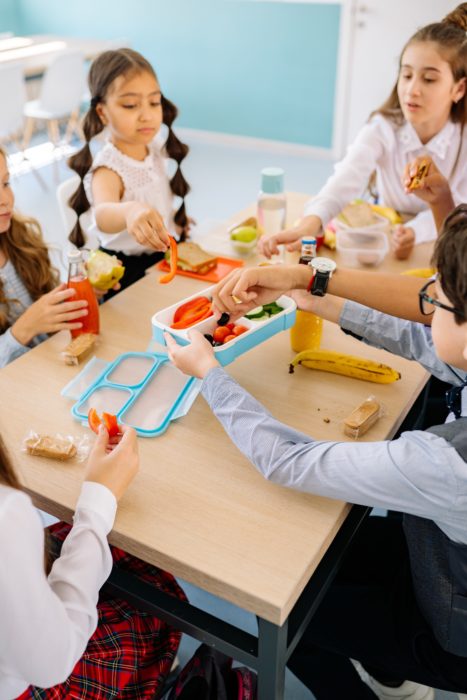
As the school year ramps up, students are settling into new routines—and it’s a great time for families to do the same with their nutrition habits. Whether you’re packing lunches, preparing after-school snacks, or trying new dinner ideas, building healthy eating strategies early in the year can benefit kids of all ages. Below are simple ways to make nutrition fun, engaging, and more consistent this school year.
Make Food Fun and Visually Appealing
Sometimes, encouraging your child to be open to eating a larger variety of foods can start with presentation! Taking a child’s focus off “what” they’re eating and shifting it to visual factorscan help increase their willingness to try new foods.
- Try using cookie cutters, knives, food slicers, or melon ballers to create fun shapes.
- You could make eyeballs, a face, wheels, or cut a triangle for the roof of a house made with sandwiches or with other snack items.
- Use fruits and vegetables like carrots, blueberries, cherry tomatoes, broccoli, or peaches to create stars, hearts, suns, or animal faces.
These are just some ideas to make their food more exciting and appealing.
Include a Variety of Foods from All Five Food Groups
Including healthy food choices regularly is essential at any age, especially during phases of life when children’s bodies are growing rapidly. We can maximize our nutrient intake when eating a variety of foods from each of the five food groups: fruits, vegetables, grains, dairy, and protein. Children benefit from seeing a wide range of foods on their plate, as each food group provides unique nutrients.
Build Balanced Lunches and Snacks:
- Fruits & Vegetables: Get colorful! Peppers, for example, can be found in green, yellow, or red. Whole fruits can be served with oatmeal or yogurt, or as a dessert, and are a great source of daily fiber.
- Grains: Alternate white grains with whole grains like rice, crackers, breads, or tortillas.
- Protein: Beans, shrimp, meat, cheese, nuts, eggs, or milk all offer protein and nutrients.
- Dairy: Choose low-fat, fat-free, lactose-free, or fortified dairy products when possible.
It is easier to get bored with your food when eating the same foods often. Food variety could encourage more consistent healthy food behaviors for a longer period!
Involve Kids in the Kitchen
Allowing children to participate in food activities, including making snacks, bagging produce when grocery shopping, or washing produce, are ways to potentially encourage their willingness to try new foods or try foods again. Also, allowing your children to see you participating in the same type of eating strategies that you are encouraging them to practice is also a positive way to help increase your child’s likelihood of including healthy foods more often.
Homemade oatmeal cookies are a great healthier dessert option that could enhance quality time with your child that you could make together.
Try Creative Food Pairings and Combinations
Pairing a favorite food with a new food, adding more color, or mixing some foods together can help children be interested in trying new foods and combinations.
Easy Snack and Ingredient Combinations:
- Whole wheat crackers with low fat cheese
- Pretzels and peanuts
- Cheerios and blueberries
- Apples and almond butter
- Strawberries, low-fat yogurt, and pecans
- Energy oatmeal balls with chocolate chips, peanut butter, oats, and honey
- Raisins and popcorn
Think Beyond the Lunchbox: Meal Swap Ideas and Alternative Cooking Techniques
Healthy snacks can look different depending on our individual preferences. There are some great easy ways to add in extra nutrients while still playing into the preferences of your child.
Meal and Snack Swap Ideas:
- Popsicles made with 100% fruit juice
- Homemade veggie chips with guacamole
- Mashed cauliflower added to mashed potatoes
- Fruit smoothie with spinach and chia seeds for added fiber and protein
- For Taco Tuesday, mix white rice with brown rice for more fiber and mix ground beef with ground turkey to reduce the saturated fat intake
Alternative Cooking Methods:
If your child does not like the texture of some foods, try using a different cooking method when adding those foods to meals or snacks.
Some alternative cooking methods to consider include raw, baked, broiled, blanched, braised, boiled, grilled, poached, roasted, sautéed, steamed or stir fried.
Build Healthy Habits with Realistic Expectations
Some so-called traditional healthy eating strategies sometimes do not work with adults, so they may not work with your children, either! Having similar eating expectations you utilize for yourself for your toddler, grade schooler, adolescent, or teen sets the expectation extremely high.
It’s important to remember that every child is different. You can include new eating strategies slowly over time, healthy eating habits add up bite by bite. Instead of restricting their favorite foods, focus on gradually increasing the frequency and variety of healthier options into your child’s daily routine.
Remember that behavior change takes time and repetition. Shifting out of typical eating patterns will be uncomfortable, but you do not have to try the hardest strategies first. The goal is to build consistency by increasing their willingness to try a new strategy or new food more often!
Practical Reminders:
- Children often model what they see. Eat alongside them and try the same healthy foods.
- Avoid setting unrealistic expectations. Choose strategies that work for your child’s age and temperament.
- Add new habits slowly. Healthy eating doesn’t happen all at once—it’s built bite by bite.
As we enter Back to School and you’re navigating different schedules and packed lunches and snacks, try implementing some of these strategies to support your child’s overall nutritional health.
Need Extra Support?
Finding getting your child the nutrients they need challenging? Wish you just knew you were getting them everything they needed, or wish it was easier to think up meal ideas or grocery lists?
For more tips for packing school lunches or family meal planning, schedule a consultation with one of our Registered Dietitians! Call 919.237.1337 option 4 or schedule online by visiting here.