
A major concern while on a GLP-1 is maintaining muscle mass, which often has us focusing on protein-heavy meals. While this is important to consider, it’s just as important to continue feeding the bodies that we are in. Protein is one component of the calories our bodies need for fuel, but it is not the only component.
Tips for Meal Planning on a GLP-1
Here are some top tips to planning nutritiously balanced meals while on a GLP-1.
Schedule Several Small Meals
Having a schedule of mealtimes where we eat smaller amounts every 3-4 hours helps our bodies digest foods consistently throughout the day, which regulates our metabolism. When monitoring your blood sugars, this helps to prevent spikes and severe lows. This will also help with limiting side effects of nausea and GI discomfort. The example below can be adjusted to your personal schedule:
- Breakfast/Morning meal: 7am
- Morning snack: 10am
- Lunch/Midday meal: 12:30pm
- Afternoon snack: 3pm
- Dinner/Evening meal: 6pm
- Dessert/Evening snack: 9pm
Balance Your Plate
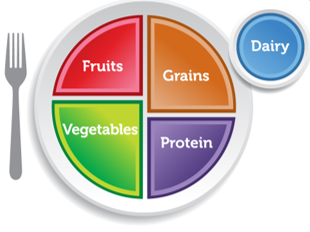 Balancing macronutrients we put into meals and snacks helps to balance how our bodies absorb them. When putting meals together, the image below can be helpful when considering the components to include for balance. For snacks, two to three of these components can be paired. For example, pairing fruit with a protein (like banana and peanut butter) for a snack will allow our body to absorb the sugars from the carbohydrates more slowly, and over a longer period of time. This helps decrease blood sugar spikes, sustain our energy, and keep us fuller longer.
- Whole Grains: Brown rice, oats, whole grain pastas & breads
- Lean Protein: Salmon, chicken, beans, nuts
- Non-starchy Vegetables: Spinach, broccoli, carrots, tomatoes
- Fruits: Strawberries, oranges, cherries, watermelon
- Low Fat Dairy: Milk, yogurt, low-fat cheese
- Also include Fluids: Water, tea, coffee, other beverages
Prepare for a Lifestyle Change
For some, starting a GLP-1 can help kick-start lifestyle changes. You will want to ensure all of these changes are sustainable. Once healthy habits are gradually added with a GLP-1, it’s important to cultivate a healthy lifestyle around them for lifelong results.
Diet
It’s helpful to keep up with the meal schedules and balanced plates mentioned above. Small meals and snacks or shakes throughout the day can allow continuous calories to maintain the body’s metabolic functions and maintain muscle mass that is often lost in a weight loss journey.
Example meal and snack with timing and balanced components:
- Meal 1 at 7am: 1 egg omelet with ½ cup peppers and mushrooms, ½ cup of mixed berries, 1 slice of whole grain toast and an 8oz glass of 1% milk
- Snack 1 at 10am: Premier protein shake and 1 kiwi
Physical activity
Muscle loss is a concern when losing weight. To prevent this, it’s important to include movement throughout the day and be sure to pair with strength/resistance training. Giving our muscles work to do allows them to pull in the nutrients necessary to maintain their strength.
American Heart Association (AHA) recommends 150 minutes of moderate-intensity aerobic activity (or 75 minutes, vigorous) per week and 2 days focused on moderate- to high- intensity muscle-strengthening.
Example physical activity routine to meet AHA recommendations
- Resistance band strength training: 15-20 mins Tues/Thurs
- Cardio: 40-60 mins brisk walking Mon/Wed/Fri
If you would benefit from professional support in preparing meals, understanding your nutritional needs, and even learning more tips to building a healthy lifestyle, learn more about Avance Care Nutrition Services today.