
When the Greater Wilmington Chamber of Commerce announced its 2026 40 Under 40 honorees, Dr. Rock Vomer was recognized among an exceptional group of young professionals making a meaningful impact across southeastern North Carolina through leadership, professional achievement, and service to their communities. The annual recognition celebrates individuals who are helping shape the future of the region both in their careers and beyond.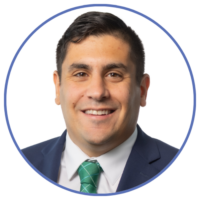
For those who know Dr. Rock as their physician, this recognition comes as no surprise. Whether he’s caring for patients, mentoring colleagues, or helping lead Avance Care as a physician-owner, his focus has always been on building healthier communities through compassionate, accessible primary care.
We sat down with Dr. Rock to learn more about his journey into medicine, what this recognition means to him, the lessons he’s learned along the way, and what continues to inspire him every day.
Congratulations on being recognized as one of Wilmington’s 40 Under 40. What was your first reaction when you learned you’d been selected?
My first thought was my team. No physician earns something like this alone — the nurses, medical assistants, and front desk staff I work with are the reason patients feel cared for before I ever walk in the room. My name is on the award, but it belongs to my team.
What does this recognition mean to you personally?
It means Wilmington sees what we’re building: medicine that’s personal, local, and human — care built on relationships. I came here believing healthcare works best when the people delivering it live in, listen to, and care for their community. This award tells me that belief resonates.
What do you think this award says about the kind of physician and leader you’ve tried to become?
That I’ve stayed close to the ground. The further decisions drift from the exam room — up into boardrooms and spreadsheets in other cities — the worse it gets for patients. I’ve tried to be the opposite: a physician who knows his patients’ names and his staff’s kids’ names; making decisions where care actually happens.
When did you first realize you wanted to become a physician?
When my grandfather was diagnosed with progressive supranuclear palsy. We were extremely close, and watching him move through the system broke my heart — not because the people caring for him didn’t care, but because the system around them didn’t. He was a number, and the decisions shaping his care were made by people who would never meet him. I saw corporate, consolidated healthcare from the other side of the bed rail.
The turning point was taking him to Mayo Clinic. For the first time, I saw what medicine looks like when the patient genuinely comes first — physicians leading, teams collaborating, nobody rushed. I’d been on a path toward physical therapy; that experience changed my course entirely. I decided to become a physician grounded in the principles that make Mayo what it is, and to bring that kind of care to the community level — an answer to what my grandfather went through.
What inspired you to build your career in Wilmington?
Family, plain and simple. This is where our family is, and the area needed more choices for high-quality healthcare. So the mission was personal from day one: build the care we’d want for our own family — because our family, friends, and neighbors are the patients. I wanted to practice somewhere I’d see my patients at the grocery store and the soccer field. When the people you serve are the people you love, you don’t cut corners.
You’ve worn many hats — as a physician, practice owner, and leader. How have those roles shaped one another?
Being a physician keeps my leadership honest; being a leader keeps my medicine sustainable. Once you’ve felt what a broken medical system does to a patient, or what burnout does to a great nurse, you stop tolerating the systems that cause them. Ownership taught me culture isn’t a poster on the wall — it’s a hundred small decisions about ensuring the people come first.
Looking back, what moments have had the biggest impact on your career?
My grandfather’s illness set the direction; training under Dr. Pujalte at Mayo set the standard. And my research appointments — first at Mayo Clinic, now with UNCW — have shaped me in ways I didn’t expect. Research keeps you curious and humble, keeps your skills sharp, and connects you to the next generation. The discipline of asking “what does the evidence actually say?” carries straight to the bedside.
Leadership in healthcare has changed a lot over the past several years. What does good leadership look like to you?
It starts with knowing the difference between business of healthcare and the art of medicine — they are not the same thing. Corporate healthcare is a machine: cold, consolidated, processing people as numbers, with decisions made far away by people who don’t treat patients. Medicine is what we actually do: personalized, relationship-based care that helps the patient and the care team thrive. Good leadership protects medicine from the machine — it keeps decisions close to their consequences, removes obstacles instead of adding them, and measures success by whether people are thriving, not just whether the numbers are.
How do you balance caring for patients while also helping lead and grow a medical practice?
They aren’t competing priorities — the relationship is the business model. When patients are truly cared for and the team is truly supported, both thrive as interconnect parties and the practice grows as a natural result. Every decision starts with one question: does this strengthen the relationship between our team and the person in front of us? If growth requires weakening it, it’s the wrong kind of growth.
What’s something you’ve learned as an owner that surprised you?
Two things. First, how much patients notice culture. Within thirty seconds they can feel whether the front desk is valued, whether the nurses are rushed, whether the place runs for them or for a spreadsheet. Keeping great people isn’t an HR issue — it’s a clinical outcome.
Second, how much partnerships matter. A good partner invests in the people doing the work, trusts the local team that knows its patients, and adds resources without adding distance. Get that right and patients and the care team both thrive — the business grows almost as a side effect. When a partner’s priorities drift from the patient, everyone feels it. I now judge every partnership by one question: does this bring us closer to our patients, or further away?
What do you hope every patient feels after leaving your office?
Known. Not processed, not billed — known. Seen by people who remember them, had time for them, and will be there next time as the person they are instead of just another patient. That relationship is the actual medicine in primary care. It’s the soil patients thrive in — and it’s what keeps our team thriving too.
What keeps you passionate about family medicine and sports medicine?
Family medicine is medicine in its purest form — built entirely on relationships. I know whole families across years, and that trust changes what’s possible: patients tell you things sooner, follow through more, heal better. As corporate healthcare makes care more transactional, family medicine is where the human part survives. That’s worth fighting for. Sports medicine allows me to help my patients doing what they love: their hobbies, playing with their grandkids, gardening and competing at the highest level they want to. Watching them achieve their goals outside of the office and tell me about their wins pushes me to continue to find ways to be able to support them from the clinic.
Is there a patient interaction or experience that has stayed with you?
The one that stays with me isn’t from my exam room — it’s my grandfather. I experienced his care as a family member before I ever became a physician, and I know what it feels like when the system treats someone you love as a number. I never want a patient of mine to feel that pain. Every visit, the goal is simple: leave feeling supported and hopeful. That’s the standard he set for me.
This award recognizes people making an impact in Wilmington. Why has being involved in this community been important to you?
The Wilmington community is what has allowed our clinic to grow. They have shown up and supported us as much as we have shown up for them. Each community partnership, Without Limits, UNCW, the Chamber of Commerce to name a few, and each community event has allowed us to better understand how to support each unique element of Wilmington. The direct feedback from community members allows us to quickly make decisions for the clinic that improve the level of care we are providing to the community,
What excites you most about the future of healthcare in southeastern North Carolina?
We’re at a turning point. Patients and clinicians are tired of consolidation and care run by people they’ll never meet. What excites me is the counter-movement: locally led, physician-led, relationship-based care shaped by the people who actually deliver it, where patients and care teams thrive together instead of one being sacrificed for the other. Southeastern North Carolina has the talent and the loyalty to build something better. We are excited to be part of it.
Outside of medicine, how do you like to spend your time?
Our hands have been busy since April last year when we welcomed our son, Enzo, into this world. Now we love spending time as a family exploring Wilmington through food or on the water.
Who has influenced your career the most?
Dr. George Pujalte at Mayo Clinic in Jacksonville. He took me under his wing as a fourth-year medical student and has guided every step of my journey since — I wouldn’t be the physician I am without him. He modeled more than clinical excellence; he showed me what investing in people looks like, and I try to pass that on to my own team. And that team teaches me daily — I’ve learned as much medicine from great nurses and MAs as from any textbook.
If you could give one piece of advice to someone just beginning their career, what would it be?
Attach yourself to people, not institutions. Institutions restructure, rebrand, and forget you. The relationships you build — with patients, mentors, teammates — are the career. Protect them, invest in them, and build wherever they can thrive.
When people hear your name years from now, what do you hope they remember?
Honestly, I hope they remember us more than me. The nurse who called to check on them the next day. The front desk who knew their kids’ names. The team that hugged them in the parking lot after hard news. Our clinic that grew here, organically, out of people who live in this community and love it, caring for their own neighbors. The vision may have started as my idea, but it stopped being mine long ago — it became our team’s identity and shared mission: something personal, something rooted, built for Wilmington, by Wilmington. If a patient someday says, “That was the place where I felt heard and helped me navigate my healthcare in a meaningful way” — that’s the whole legacy.